Emmanuel Achiri
Download PDF
Feb 19 2026
Steve_Allen/Depositphotos
When, on January 14, 2026, the Conference of Presidents at the European Parliament released a joint statement calling for respect for the rules-based international order in response to US President Trumps threats to annex Greenland, commentators like myself reacted with disbelief. Only a few days earlier, Brussels had all but actively endorsed Trumps invasion of Venezuela. Respect for international law and the rules-based system did not appear to matter then, but with European interests threatened, appeals to the sanctity of the UN Charter resurfaced with renewed conviction. The hypocrisy of the EUs selective invocation of international law becomes even more contentious when one considers Denmarks ongoing colonial relationship with Greenland. This is the central point of this article: to raise fundamental questions about how and when international law is mobilised. By interrogating this relationship between international law and power, the aim is to engender a much-needed discussion about how Greenland exposes the persistence of European colonial structures, even as European states mobilise international law against external challengers. Ultimately, Greenland exposes the persistence of European colonial structures even as European states invoke international law against external challengers, revealing how international law continues to mediate political struggles shaped by empire, race, and hierarchy.
Following Russias invasion of Ukraine in February 2022, the President of the European Council Charles Michel and the President of the European Commission Ursula von der Leyen, quickly condemned the deployment of Russian troops to Donetsk and Luhansk oblasts asillegal and unacceptable. The European Union (EU) released a statement denouncing this in thestrongest possible terms, accusing Russia of violatingArticle 1 of the United Nations Charter. EU Officials have repeatedly highlighted that Russias military intervention in Russia also violatesArticle 2(4) of the UN Charter. Since this invasion, the European Union has preceded to take a wide range of punitive measures against Russia, ranging from travel bans and asset freezes for top Russian officials and oligarchs, financial and economic restrictions on the Russian energy and banking sector, trade and technological controls, as well asmilitary and financial assistanceto Ukraine totaling 193.3 billion. As of 2025, the EU bloc has agreed onseventeen major sanctions packagesagainst Russia.
Following the deadly Hamas attack on Israel in October 2023strongly condemnedby the EU and the subsequent Israeli onslaught on Gaza which has led to the death of aboutseventy thousand Palestinians, the Union has repeatedly failed to condemn Israel in equally strong terms. Despite, the International Court of Justice (ICJ) stating in January 2024 that the ongoing Israeli war on Gaza riskirreparable harmto Palestinians to be protected from genocide, and in a later advisory opinion in July 2024 declaring Israels decades-long presence in Palestinian territory as anillegal occupationunder international law, EU member states have failed to impose similar sanctions or suspend theEU-Israel Association Agreement. The same EU leaders have all but openly endorsed the United Statesinvasion of Venezuelaand the abduction of Nicols Maduro, the President of Venezuela. Notably, the EU bloc has declined to condemn what constitutes a blatant breach of Venezuelas sovereignty, opting instead forvague calls for the respect of international law. At the same time, the EU has echoed claims by US President Donald Trump that Maduro lacks political legitimacy, that his removal is necessary to combat transnational organised crime and drug trafficking, and that this action represents anopportunity for democratic transitionfor the Venezuelan people.
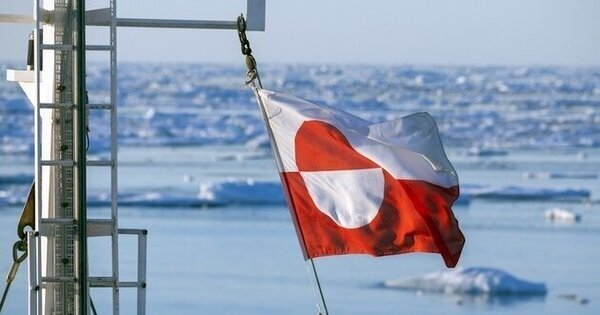
Following the US unlawful intervention in Venezuela and abduction of Maduro, Trump turned his sights on the Arctic territory of Greenland. Claiming that acquiring Greenland was vital forUS national security, Trumpthreatened sanctionson Denmark and on other European allies including Norway, Sweden, France, the United Kingdom, the Netherlands, and Finland, if they did not agree to US demands. He refused to rule out more aggressive actions including the use ofmilitary force, although following the World Economic Forum in Davos, he later changed tune, saying the US will not use force and instead announced ongoing negotiations with Denmark for amutually beneficial dealover the strategic territory of Greenland.
Nonetheless, before Davos, EU officials raised alarms over what they considered to be aggressive actions by the United States over Greenland. In response, Danish Prime Minister Mette Frederiksen, pushed back against Trump, saying it madeabsolutely no sensefor the US to talk about needing Greenland. She insisted that the US had no right annex any of the three countries of the Danish Kingdom, strongly urging Trump to stop the threats. In support of Denmark, group leaders at the European Parliamentunequivocally condemnedthe statements by Trump claiming that the attempt to undermine the sovereignty and the territorial integrity of Denmark and Greenland, violates international law and the United Nations Charter. In this statement, the European Parliament reiterated that Denmark had full sovereignty over Greenland, and that based on the1916 agreement between the United States and Denmark, the US recognised that all of Greenland rightfully constituted Danish territory, and any external attempts to alter the status quo are unacceptable. The EU bloc also began talks onretaliatory measuresagainst the US if Trump followed through with this threat of sanctions. On the social media platform X, European Commission President Von der Leyen, stated thatlaw is stronger than forceand that these principles applied not only to the European Union but also to Greenland. French President Emmanuel Macron while at Davos also rebuked what he referred to asnew imperialism or new colonialism. Meanwhile, the German Foreign Ministry noted thatthe future of Greenland lies in the hands of the Greenlandersas an autonomous part of Denmark. To show strength,Denmarkand someEU allieshave increased their military presence in Greenland, although it later claimed that this was not meant as aprovocationto the US.
International Law When Convenient
From a decolonial scholar-activist perspective, this geopolitical debacle unfolds with a sense of profound bewilderment. The shock was not Trumps desires to annex Greenland or his refusal to rule out the use of force if necessary. After all, Trumps fixation on acquiring Greenland can be traced back to hisfirst termwhen he first mentioned purchasing the territory from Denmark. Rather, this reflects his long-standing ambition to redraw the architecture of American influence in the Western hemisphere as part of what he describes as aGolden Domedefense system against China and Russia. This bewilderment, in fact, stems from two things: EU politicians and commentators invoking respect for international law as a defense against Trumps threats, and in particular, the reference to Greenland as an autonomous part of Denmark.
On the subject of US threats constituting a violation of international law, it has been odd to read EU actors suddenly remember that the use or threat of the use of force is prohibited in UN Charter Article 2(4) in the conduct of state affairs, when a few days prior, they refused to condemn the US military intervention in Venezuela. In fact, as stated earlier, European leaders preferred to frame this intervention as an opportunity for democratic transition in Venezuela. Indeed over the last twenty-seven months not only has the EU actively restated Israels right to self-defense (the legality of which is debatedhereandhere), but several EU member states actively supplymilitary assistance, offer political cover to Israel, and the EU has failed to suspend the EU-Israel Association Agreement despite thousands of Palestinian deaths and an ICJ advisory opinion on Israels occupation of Palestine. While the world awaits for the ICJs decision on whether Israel has committed genocide in Gaza, there have been severe breaches ofinternational humanitarian lawby Israeli forces, that is, if one chooses to dismiss the extensive reports byAmnesty International,Human Rights Watch,BTselem and Physicians for Human Rights-Israel(Israeli rights organisations), and the UN Independent InternationalCommissionof Inquiry on the Occupied Palestinian Territory, including East Jerusalem, and Israel, calling this a genocide.
Given its complicity, the EUs newly discovered affinity when Trump threatens annexation of Greenland is nothing short of incongruous. More so, when one compares the reticence by many EU political commentators to condemn violations of international law in Gaza and Venezuela, and yet with Denmark and Greenland, the illegality of US threats over Greenland has been presented with knife-like precision.
What might be contentious is the justification used by EU actors to fend off US annexation of Greenland. As stated earlier, EU political actors have strongly condemned what they see as an attempt to undermine Denmarks territorial integrity, as a new form of colonialism and imperialism, and ascoercion-as-extortion, amounting to a violation of Article 2(4) of the UN Charter. And here is where the confusion lies; this is not merely about the EUs duplicitous approach to the use of force under international law. Instead, it is about the less common debate on the nature of Greenlands relationship with Denmark and whether this relationship itself is consistent with a decolonial reading of international law.
The Question of Greenlands Status
Most readings of Danish, EU, and international law conclude that Greenland is not asovereign state and possesses no independent legal personalityunder international law with its legal statusfirmly establishedwithin the Kingdom of Denmark, and yet, they are also considered a distinct people with the right to self-determination as per the2009 Act on Greenland Self-Government.Official Danishpublications describe it as an autonomous territory within the Kingdom of Denmark or as a self-ruling Danish territory. In practice thismeansthat Greenlanders have their own Parliament and government, including control over mineral extraction and natural resources, while Denmark maintains control over monetary policy, defense, foreign affairs, constitutional matters, and the Danish Supreme Court as the final court of appeal. Greenlanders also have EU citizenship through their Danish nationality. It is this relationship between Greenland as a part of Denmark, and Denmark being a member of the Union, thatEuropean leadersinvoke when they assert that Trumps threats constitute an affront to European security cooperation.
It is this relationship which is investigated. One would be forgiven to simply accept that the relationship between Greenland and the Kingdom of Denmark is not polemic and is perfectly lawful under international law. But that would be a purely Western reading of international law and norms. To be a bit more precise, what does self-determination really mean? Does it mean full independence from outside interference or does it mean the right for a people to decide their own political status and pursue their own economic, social, and cultural development, but short of full independence?
In fact, despite being one of the most frequently used phrases in legal and political debates, the principle of self-determination remains a contested political norm beyond the specific context of the decolonisation movements in the mid-twentieth century. Nowhere was this more visible than in the ICJs opinion in theEast Timorcase, where although the Court recognised the essential nature of the principle of self-determination, it was unable to give concrete legal effect to that principle.
But the Courts reading on self-determination should not be understood in a vacuum. As former President of the ICJ Rosalyn Higgins has contended,international law is not just rules, it is a process and its relationship with power is intimate. Reading the Courts opinion in the East Timor case from this lens, it would not be unusual or conspiratorial to view this decision as functioning as a containment strategy. That is, by recognising the principle of self-determination at a highly abstract level, the Court avoids doctrinal developments that might unsettle the principles of the right of states to their territorial integrity. Decolonial readings have already critiqued how international law and its founding principles of sovereignty and territorial integritywas constituted through colonialism, thereby privileging the protection of Western nation-state constructions and the exploitation and governing of non-European peoples. In this sense, self-determination as a concept is purposefully depoliticised and rendered acceptable only when it does notdisrupt the colonial territorial orderthat treats sovereignty and territorial integrity as non-negotiable principles of international law.
But interrogating the principle of self-determination from a decolonial lens rooted in Indigenous and independence movements, the conclusions are different. This approach enables probing into power structures with the aim of understanding who has the power to decide territorial, economic, political and cultural life, and through which historical structures have these come to be. Born out of anti-colonial struggle, the core aim of the concept of self-determination has been independence, and not the currently dehistoricised interpretation which retrofits the concept to suit colonial power holders. From this view, self-determination cannot be reduced to just the right of a people to be autonomous or have a degree of control over political, economic, and social matters within their territory, but rather entails a right tofull independence, and freedom from outside interference in the exercise of self-governance. In this sense, anything short of full independence, is illusory and leavescolonial powerintact, with the territory in question having outward trappings of autonomy, but in reality economic and political policy isdirected from outside.
This sums up the relationship between Greenland and Denmark, and this is quite plain to see unless one insists on an unduly narrow understanding of colonialism one common in Western Europe but largely abandoned by postcolonial scholarship. Yes, Greenland is a self-governing autonomous territory within Denmark based on the2009 Act on Greenland self-government, however, Denmark maintains control over monetary policy, defense, foreign affairs, constitutional matters, and the Danish Supreme Court as the final court of appeal. This is effective control that goes beyond just outside interference.
In addition, contemporary political debate in Greenland is still fueled by Denmarks decision to unilaterally and without consulting Greenlanders, end its official colonial classification of Greenland, incorporating it into its constitutional framework in 1953. In practice, this meant that Greenland was removed from the list of Non-Self Governing Territories (NSGT) byUN General Assembly Resolution 854in 1954, thereby falling out of the international legal framework for NSGTs (UN General Assembly Resolution 1541) which permitted them to pursue their self-determination as an independent state, or by a merger, or any other form. The result is that Greenlands pursuit of self-determination and independence becomessubject to domestic Danish law.
This notwithstanding, the 2009 Act contains provisions that allows Greenland to access independence. This is often used by Western Europeans to argue that no one is stopping Greenlanders from getting their independence if they choose to. But first, the choice of independence is not unilateral and must be negotiated with Denmark, confirmed by a referendum in Greenland, and then submitted to the parliaments of Greenland and Denmark for political consent. This is not astraightforward processas it sits within broader institutional and power structures that shape how self-determination is negotiated, including Greenlandseconomic dependencyon Denmark. Secondly, the assertion that Greenlanders can vote via a referendum if they really want independence, ignores Greenlandsgeostrategic importanceand potentialelectoral interferenceby outside powers. It also reproduces a colonial mindset of treating consent within a vacuum, overlooking how this is structurally produced through decades of material exploitation,ethnographic discourse,master-servant relationship, and epistemic-imposed dominance.Further, by requesting proof of desire to exit colonial structures from colonised people, colonialism is treated as the norm with the burden shifting to the colonised and not the coloniser.
International Law and Colonial Continuities
The denial of Greenlands position as a colony of Denmark relies on an understanding of colonialism simply as formal legal inferiority, or the absence of voting rights for indigenes, or brutal subjugation using military violence. But if this were the case, then most of the colonial arrangements post-1945 would have qualified as decolonised the moment limited representation and citizenship was granted to colonised peoples. This is precisely the case with Greenland where formal equality within Danish law is confused as substantive self-determination. However, the reality is that Nuuk is constitutionally subordinate to Copenhagen. The Danish supreme court is the highest legal body, and the final decisions about Greenlands monetary and foreign policy are determined in Copenhagen. For all intents and purposes, if one interprets self-determination in the spirit of anti-colonial struggle, then it is difficult not to qualify Denmarks ongoing relationship with Greenland as a colonial one.
This therefore begs the question, if colonial rule is unlawful under international law, then what moral authority does Denmark or the European Union have to qualify US attempts to acquire Greenland as a potential violation of international law? Does this mean that the invocation of the violation of international law by one state or legal entity negate ones own violations? Luckily, international law does not operate this way. The law is clear on this matter including ICJ jurisprudenceherethat one states breach of international law does not exist as a legal defense. The argument is not that Denmark and the EU justify Denmarks colonial presence in Greenland as a deterrence to US acquisition, but rather to highlight the duplicituous application of international law by the former. Indeed, Article 2(4) of theUN Charter, prohibits the use or the threat of the use of force in the conduct of international affairs. Similarly, international law clearly establishes through Articles 1(2), 55, and 73 of the UN Charter; the1960 Declaration on the Granting of Independence to Colonial Countries and Peoples; and Article 1 common to theInternational Covenant on Civil and Political Rightsand theInternational Covenant on Economic, Social and Cultural Rightsthat the subjection of peoples to alien subjugation, domination and exploitation constitutes a denial of fundamental human rights.
There is not one version of international law for some countries and another version for others, irrespective of the conduct and discourse of some Western states. Denmark and the European Union cannot actively turn a blind eye to what respectable human rights organisations including Israeli ones are referring to as a genocide in Gaza, by refusing to suspend the EU-Israel Association Agreement and undertake other diplomatic actions to stop Israels onslaught, while simultaneously invoking respect for international law when Trump threatens to seize Greenland. Similarly, the European Union cannot openly endorse the United States invasion of Venezuela and the abduction of Maduro, yet claim that Trumps coercive measures against European countries in pursuit of Greenland constitute a new form of colonialism, not when Denmark maintains an active colonial presence in Greenland.
Further Reading on E-International Relations
- Trumps Vision for Greenland and the Emerging World Order
- Postcolonial Gaslighting and Greenland: When Post-Truth Gets in the Way of Independence
- From French Guiana to the Falklands: Could US Influence Reshape Europes Overseas Territories?
- Opinion After Greenland, is French Guiana Americas Next Territorial Prize?
- Opinion Double Standards and Media Bias in Israels War on Gaza
- Opinion How Trump Undermines Europes Climate Ambitions
About The Author(s)
Emmanuel Achiriis a scholar-activist who holds a PhD in International Politics and Migration Law. He works with the European Network Against Racism (ENAR). He primarily writes on race, empire, migration, and international law. His most recent works, forthcoming: Emmanuel Achiri and Buhari Shehu Miapyen, Racial Capitalism and the Political Economy of European Integration: Rethinking the European Project Beyond Liberal Narratives, in Towards a Decolonial European Studies (London: Agenda Publishing UK, 2026), and Emmanuel Achiri, Raceless in Name Only: Whiteness and the Racial Governance of Mobility in the European Union (Brussels: European Network Against Racism, March 2026).
Editorial Credit(s)
Yatana Yamahata
Tags
European UnionGreenland
Source link