Hostilities between the US/Israel, and Iran have escalated recently, resulting in hundreds of thousands of British nationals being left stranded abroad due to cancelled flights.
The conflict has also begun having an impact in the UK, with fuel and energy prices already starting to rise.
There are now concerns that the Middle East conflict could have an impact on prices and stock in UK supermarkets.
Around 12% of UK households already experience “food insecurity” (as of January), according to The Food Foundation.
📢⚠️ New data shows #foodinsecurity levels are rising across the UK.
🔹 More than 1 in 9 households are struggling to afford healthy food
🔹 53% of food insecure households have cut back on fruit & 40% on vegHow to fix food for good: ➡️ https://t.co/8Yt5T8T4GK#GoodFoodBill pic.twitter.com/gLjwp6bkD7
— The Food Foundation (@Food_Foundation) March 18, 2026
Concerns are now that the effects from what is happening overseas will only add to that number.
Executive director of The Food Foundation, Anna Taylor, said: “Many are asking whether the conflict in Iran will push up food prices. The honest answer is: it will, if it is prolonged.
“But that question misses the bigger point. The real issue is that the UK food system has become dangerously exposed to shocks far beyond our borders.
“What we need now is a Good Food Bill that sets out a long-term framework for building resilience in the UK food system — one that holds successive governments to account and protects citizens and farmers alike.”
Will the war in the Middle East cause price hikes in UK supermarkets?
The longer the conflict in the Middle East goes on, the more likely it is that supermarket prices will rise, according to retail expert and Vypr founder Ben Davies.
He explained: “This is due to the cost of energy and fuel increasing primarily, which will affect transport costs and longer-term importation costs.
“Buyers in supermarkets plan months ahead and purchase products based on consumer demand, so many orders and agreements will already be in place, and those orders will be affected most quickly.
“It could also result in fewer discounts and promotions in the short term.”
Mr Davies estimates prices could jump “a few percent” over the coming weeks, but said retailers will be working hard to keep them as low as they can, for as long as they can.
He said: “UK shoppers are very price-conscious, so if one retailer increases by too much, then they could lose customers, so everyone will be very cautious about increasing more than is essential.”
While Mr Davies said it may take a few weeks for these changes to take effect, around 70% of shoppers claim they have already seen a price rise in UK supermarkets, according to a recent survey by product intelligence business Vypr .
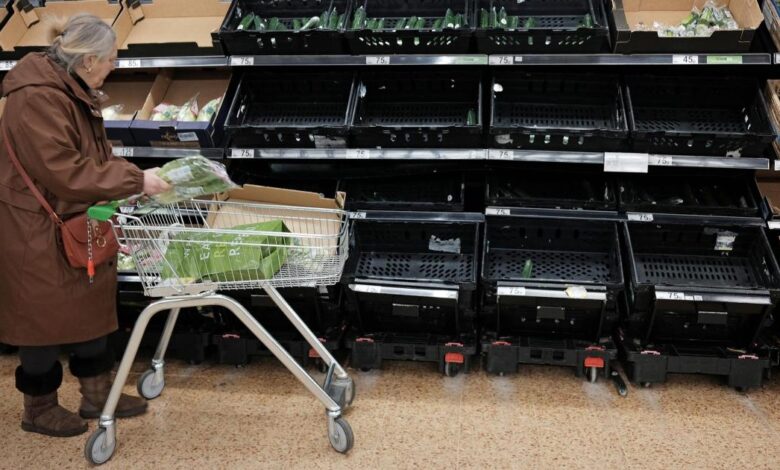
Will the Middle East conflict cause supply shortages at UK supermarkets?
Major UK supermarkets, including Lidl, Asda, Tesco, and Morrisons, have already experienced supply shortages in 2026.
These shortages were a result of unexpected heavy rainfall in key growing areas, particularly in southern Europe and North Africa.
Strawberries, raspberries, avocados, and peppers were said to be among the worst-affected items.
Wet weather in the UK and Europe is continuing to cause significant issues for fruit and veg crops
Leading to sporadic #shortages of some items on supermarket shelves this week https://t.co/2TK5RpMHNq
— The Grocer (@TheGrocer) February 20, 2026
The Middle East conflict could cause more shortages in the coming weeks, Mr Davies warned.
This could impact products grown and sourced from that part of the world, including:
- Cherry tomatoes
- Avocados
- Oranges
- Lemons
He added that supermarket shelves will become emptier more quickly if people start to panic-buy.
But Mr Davies said consumers “should not be concerned” about food security or general shortages, “as there is still plenty of food available”.
The retail expert commented: “Supermarket buyers will be working behind the scenes to ensure supply is disrupted as little as possible and may switch suppliers, which could also affect the cost of fresh produce.
“Speciality foods with a longer shelf life, such as dried fruit, tinned or jars of olives and pickles, may take longer to be affected depending on how much stock is held in the UK and how long it takes to sell through.”
RECOMMENDED READING:
Mr Davies continued: “Shoppers should look for seasonal vegetables and fruit that are grown within the UK and consider switching to frozen fruit and vegetables for a cost effective and healthy alternative to fresh.
“Look for items grown closer to the UK, for example, Spain and Europe, for lower ‘food miles’ as this will also mean they will cost less to transport here.
“Panic buying does not help anyone and so consumers should shop as they would normally and only purchase what they need.”
Have you seen any supply shortages or price rises in your local supermarket? Let us know in the poll above or in the comments below.