Jakarta falls silent each Eid. Skyscrapers empty, traffic thins, and millions leave for hometowns. Yet behind the quiet, a different story unfolds—of those who stay, work, and quietly keep Indonesia’s capital alive.
On social media, a phrase captures the moment with wry precision: “Jakarta now only has the main players left.” It sounds playful, but it reveals a deeper truth about duty, sacrifice, and survival.
The “main players” are not celebrities or elites. They are workers who remain in the city, holding together transport, retail, and essential services while others celebrate the Eid al-Fitr with family.
They carry a quiet burden—postponing reunions, suppressing homesickness, and choosing responsibility over tradition—so their families can celebrate in comfort, even in their absence.
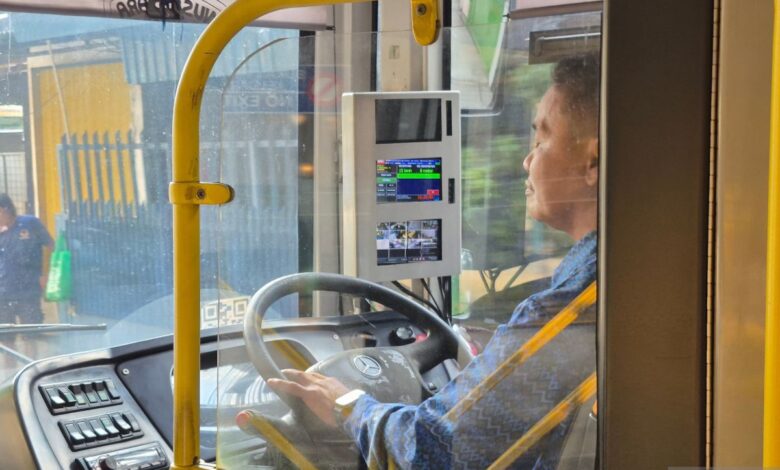
One of them is Dasman, a middle-aged migrant from Padang, West Sumatra. While others planned their journeys home, he sat behind the wheel of a TransJakarta bus, steering through unusually empty streets.
Dasman drives route 1H, linking Tanah Abang and Gondangdia Station. For less than a year, he has worked as a city bus driver after years navigating long-haul trucks across Indonesia.
His experience shows in his calm precision and discipline on the road. But this Eid marks his second consecutive holiday away from home, a decision shaped not by indifference, but by necessity.
By staying in Jakarta, Dasman earns overtime pay—income that stretches further than a plane ticket home. It is a trade-off he has learned to accept over time.
“The important thing is my family can celebrate peacefully without worrying about money,” he said, choosing long hours over shared meals and laughter.
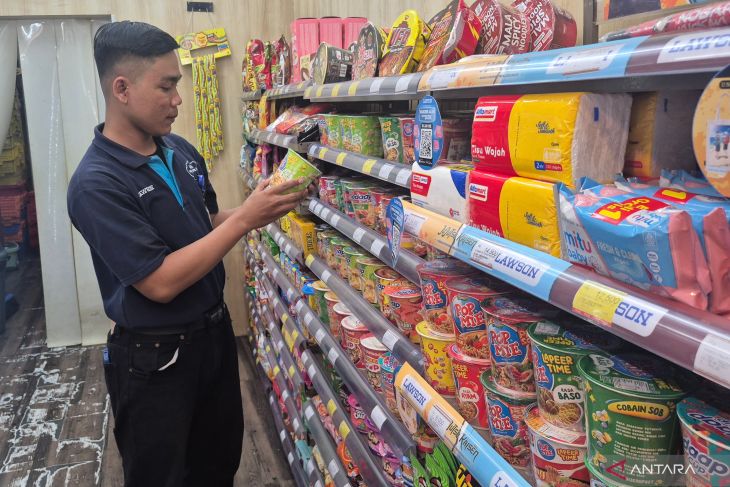
At Gondangdia Station, another “main player” takes over the story. Inside a minimarket, the soft rhythm of a payment scanner replaces the usual holiday noise.
Behind the counter stands Anwar, a young worker from Cianjur, West Java. For three years, he has spent Eid not in celebration, but in service.
Gone are the nights of takbiran with friends, once a cherished ritual marking the end of Ramadan. In their place are shifts, receipts, and quiet determination.
Anwar delays his trip home until days after Eid, when crowds begin to thin. The timing is deliberate—holiday shifts bring higher wages and more financial stability.
At a young age, he has learned to prioritize income over immediacy, setting aside the emotional pull of celebrating on the day itself.
Each item he scans, each shelf he arranges, becomes part of a larger purpose: ensuring his family back home can celebrate with joy, even without him present.
Elsewhere in the city, duty takes on a spiritual dimension. Abi, from Bandung, serves as a zakat officer at the Zakat Collection Unit of National Alms Agency at Istiqlal Mosque.

His work intensifies as Eid approaches. Donations flow steadily, and time becomes critical. Every contribution must be processed and distributed before the holiday prayers begin.
Abi and his team race against the clock, ensuring alms reach mustahik—the rightful recipients—on time. The task demands focus, speed, and unwavering commitment.
The responsibility leaves no room for travel. Like many others, Abi spends Eid away from his family, managing logistics and data while the city prepares for prayer.
Yet he sees meaning in the sacrifice. His work, he believes, carries a double reward: spiritual fulfillment and the ability to provide for his loved ones.
Serving at Southeast Asia’s largest mosque deepens that sense of purpose, even as distance from family lingers quietly in the background.
Dasman, Anwar, and Abi have never met. Their lives intersect only in spirit—in shared choices shaped by obligation, resilience, and care.
They are Jakarta’s unseen backbone during one of the world’s largest annual migrations, when millions leave urban centers in a tradition known as mudik.
This year, the government set Eid al-Fitr 1447 Hijri on March 21, 2026, with an estimated 143.9 million people traveling nationwide during the holiday period.
To manage the surge, authorities introduced measures including a work-from-anywhere policy aimed at easing congestion and spreading travel across several days.
The same approach applies from March 25 to 27, when return flows are expected to peak as millions head back to cities like Jakarta.
Even as highways fill again and the capital regains its rhythm, the role of these workers remains constant, bridging the quiet and the rush.
But policies alone do not sustain a city. It is people like Dasman, Anwar, and Abi—steady, unseen, and steadfast—who ensure Jakarta never truly stops.
Related news: National Police report rising Eid return traffic toward Jakarta
Related news: Police chief, ministers launch one-way traffic for Eid return flow
Source link