Scripture shows how a few spoken words can mark a life in an instant.
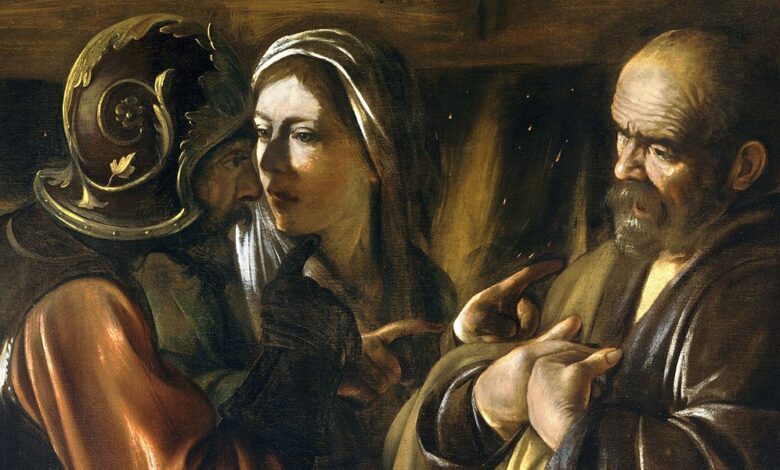
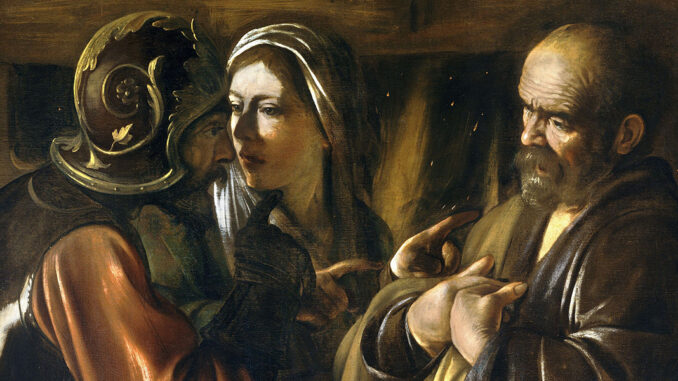
In the high priest’s courtyard, Peter denied he knew Jesus — three quick sentences spoken for self-preservation. He could not call them back. And when the rooster crowed and Peter met the Lord’s gaze, he “went out and wept bitterly” — a reminder that a few words, once loosed, can leave a wound that only repentance can begin to heal. (Luke 22:62)
“But I tell you that men will have to give account on the day of judgment for every careless word they have spoken!” Matthew 12:36
We cannot recall any word we have spoken. It may be a false word or an unkind word — a word which will blast and burn! Instantly after it has been spoken — we may wish it back and may rush after it and try to stop it — but there is no power in the world that can unsay the hurtful word — or blot it out of our life.
It is just so with our acts. A moment after we have done a wicked thing, we may bitterly repent it. We may be willing to give all we have in the world to undo it, to make it as though it never had been. But in vain. A deed done takes its place in the universe as a fact — and never can be recalled.
James shows how a single word can do irreversible harm: “Likewise, the tongue is a small part of the body, but it makes great boasts. Consider what a great forest is set on fire by a small spark. The tongue also is a fire, a world of evil among the parts of the body. It corrupts the whole body, sets the whole course of one’s life on fire, and is itself set on fire by hell.
All kinds of animals, birds, reptiles and sea creatures are being tamed and have been tamed by mankind, but no human being can tame the tongue. It is a restless evil, full of deadly poison.
With the tongue we praise our Lord and Father, and with it we curse human beings, who have been made in God’s likeness. Out of the same mouth come praise and cursing. My brothers and sisters, this should not be.” James 3:5–10
We should be sure before we speak a word or do an act — that it is right, that we shall never desire to have it recalled — for when once we have opened our lips, or lifted our hand — there will be no unsaying or undoing possible.
Our words and deeds are irrevocable. We cannot recall anything we have done, neither can we change it. But by other words and deeds, we may in some measure modify the effect of that which we cannot blot out. Paul could not undo his persecutions of Christians — but by a life of devotion to Christ’s cause — he could in a sense make reparation for the terrible harm he had done.
Proverbs 12:18 reminds us: “The words of the reckless pierce like swords, but the tongue of the wise brings healing.”
Just so, we cannot undo the wrong things we have done — but we should strive to set in motion other influences which may at least compensate in some sense for the harm they have wrought. We cannot unsay the sharp word which wounds our friend’s heart — but we can by kindness and loyal devotion — yet bring good and blessing to his life.
J. R. Miller was a pastor and former editorial superintendent of the Presbyterian Board of Publication from 1880 to 1911. His works are now in the public domain.