
RALEIGH — The North Carolina Education Corps is seeking $5 million from state lawmakers to continue operating as a “high-impact” tutoring resource for North Carolina public schools.
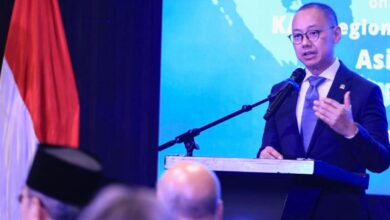
On Feb. 10, NCEC’s leaders — Executive Director John-Paul Smith, board Chair Mike Ward and former lawmaker and board member Craig Horn — brought their case for more funding to the North Carolina General Assembly’s Joint Legislative Education Oversight Committee.
The North Carolina Education Corps (NCEC), a 501(c)(3) nonprofit launched in 2021 during the COVID-19 pandemic, was created to address learning loss by recruiting and training adults — many of them retired teachers — to provide in-person literacy tutoring to K-3 students in public schools.
NCEC was first created in August 2020 by Smith, a past consultant to former Gov. Roy Cooper.
“We’re facing a literacy crisis in North Carolina,” said Horn. “A large percentage of our students are not reading on grade level.”
Ward highlighted the program’s shared-cost model, noting, “Your funding has helped us with our share of the cost,” and added public school units “pick up roughly the other half of the cost.”
Smith cited third-party research, including a randomized control trial showing tutored students gained an additional 2.2 months of learning, and described the program as cost-effective at between $1,100 and $1,400 per student annually, with districts picking up half of the cost.
Since its inception, the organization boasts having recruited and trained more than 1,300 tutors who have served more than 26,000 students across 290 elementary schools in 33 counties.
Initially, the group was funded primarily through federal Elementary and Secondary School Emergency Relief (ESSER) funds totaling $13.5 million and startup support from the Governor’s Emergency Education Relief Fund (GEER). NCEC later received approximately $3 million in nonrecurring state appropriations for the 2024-25 school year.
Additionally, during the first year of NCEC’s operations, private donations totaling $900,000 flowed into the “N.C. Education Fund” as a temporary holding mechanism. Donors provided the funds with the expectation they would eventually transfer to an independent nonprofit entity managing NCEC long term.
Due to the expiration of federal ESSER funds and the exhaustion of one-time state appropriations, NCEC reported scaling back operations in the current year.
According to NCEC, 453 of their tutors worked with nearly 8,000 students in 2025. Heading into 2026, the group says that number dropped to 117 tutors and 3,000 students.
During the hearing, Smith requested $5 million in recurring state funding.
“We ask that you provide recurring funding for high-impact tutoring,” said Smith, “$5 million gets us back to where we were in ‘24-’25; $2 million gets us to be able to continue what we’re doing this year at a scaled-back rate.”
The presenters also urged lawmakers to follow the lead of states such as Arkansas, Florida, Louisiana and Tennessee by establishing clear policy standards for “high impact” tutoring programs to ensure quality and accountability.