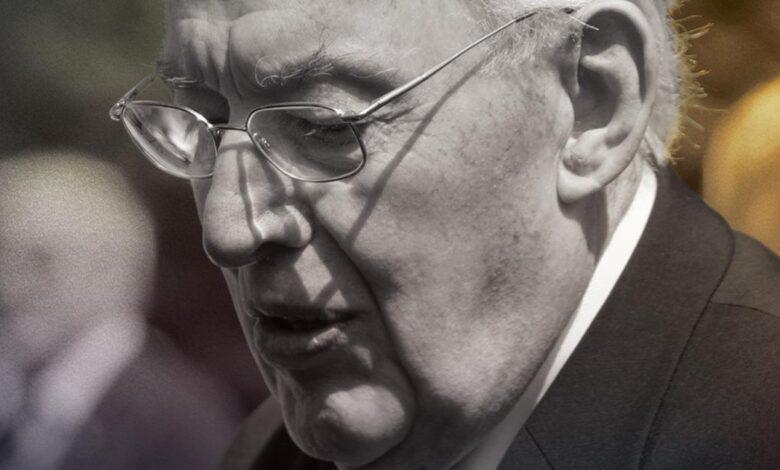
Titled ‘Ian Paisley: Preacher, Politician, and the Man Who Shaped a New Northern Ireland‘, has been written by Patrick McElvaney, and examines the complex legacy of one of Northern Ireland’s most influential and controversial figures.
The book arrives ahead of the 100th anniversary of Paisley’s birth in April 2026.
Patrick McElvaney, a retired actuary with a keen interest in Northern Ireland’s history, said: “Ian Paisley’s legacy cannot be overstated.
“His dynamism, charisma, and commitment shaped Northern Ireland in profound ways, inspiring admiration and criticism alike.
“With the 100th anniversary of his birth on the horizon, now is the time to provide a comprehensive review of his life.”
Mr McElvaney places Paisley alongside other key figures in Northern Ireland’s history, including Edward Carson and James Craig.
He explores how Paisley’s political journey began with the belief that Northern Ireland’s Protestant establishment also marginalised working-class Protestants.
The biography details Paisley’s campaign to end Ulster Unionist Party dominance, beginning with his opposition to then Prime Minister Captain Terence O’Neill, whose resignation Paisley helped secure.
The book also examines Paisley’s reputation as ‘the man who says No,’ arguing that his uncompromising stance was key to his political survival.
However, it also highlights unexpected moments of pragmatism, such as his participation in the Sunningdale Assembly in 1973.
This new work promises to offer fresh insights into Paisley’s political choices, deep religious convictions, and lasting impact on Northern Ireland.
Currently, the only other biography of Paisley is Ed Moloney’s Ian Paisley – From Demagogue to Democrat, published in 2008.
Mr McElvaney, who took up writing after retirement, was motivated to focus on Paisley’s story due to the lack of a recent, full biography ahead of the centenary.
A spokesperson said the book is expected to attract historians, political analysts, and anyone interested in the complex history of Northern Ireland.